
The Hidden Threat: Not Just Blackouts
When business owners think of power problems, they often picture a blackout, but the truth is, the greatest damage is usually caused by events you can’t see.
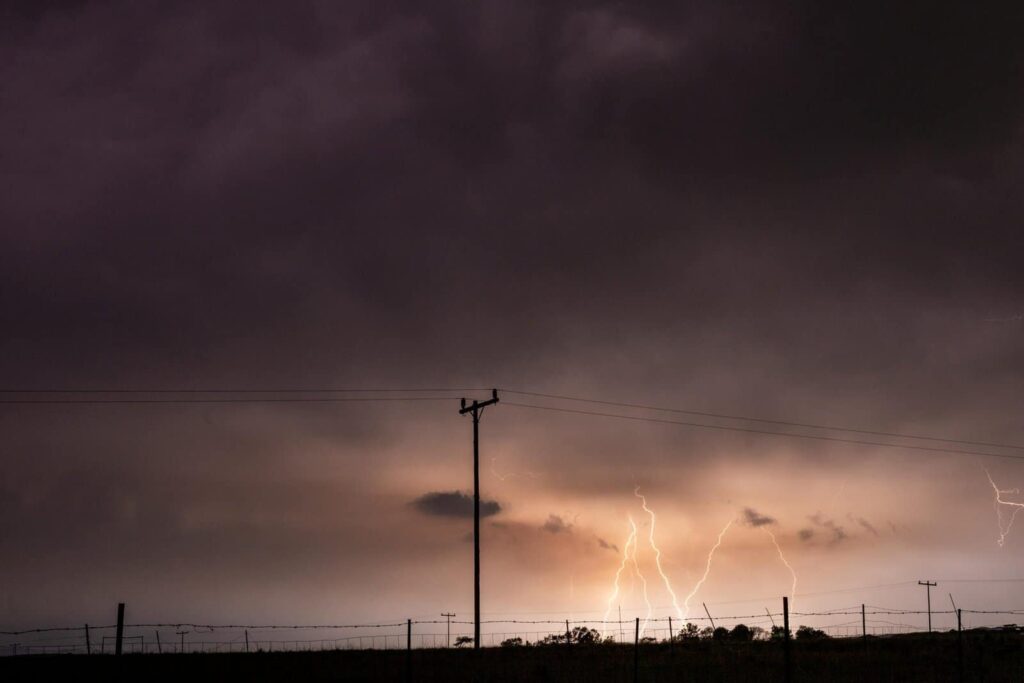
Power Surges (The Spikes): These are brief, invisible spikes in voltage that can last for only a few milliseconds. They won’t shut down your office, but they can instantly damage sensitive equipment, corrupt data, and degrade hardware performance over time. Surges can occur due to lightning, utility grid switching, or the activation of internal equipment.
Power Outages (Downtime): A sudden, complete loss of power results in lost unsaved work, data loss/corruption from abrupt shutdowns, and revenue loss due to downtime. Even a brief outage can be catastrophic.
Power protection is the essential first line of defense for business continuity.
Layer 1: Surge Protection Devices (SPDs)
Surge Protection Devices (SPDs) are the first line of defense. They act as a barrier, detecting overvoltage conditions and safely diverting the excess energy to the ground before it reaches your equipment.
It’s vital to use commercial-grade SPDs, not consumer power strips, which often wear out over time and provide zero visibility into power conditions. Whole-building surge protectors are recommended for comprehensive defense against external surges.
Layer 2: Uninterruptible Power Supply (UPS) Systems
A UPS system is the only device that addresses both surges and outages. It has two primary goals for a business network:
Graceful Shutdown: For mission-critical servers and sensitive data devices (such as NAS), the UPS provides 5–15 minutes of backup power, allowing the operating system to shut down safely and prevent data corruption.
Maintain Continuity: For network gear (modems, routers, and switches), a UPS keeps the internet functioning for a longer duration (often 30–90 minutes), allowing laptop users to stay connected during short power fluctuations.
Which UPS Type? While Standby UPSs are basic, Line-Interactive (with Automatic Voltage Regulation, or AVR) is the minimum recommended for business, as it actively stabilizes voltage without draining the battery. Online (Double-Conversion) UPS provides the highest level of protection for critical infrastructure by constantly supplying clean power.
The APC Factor: Sizing and Selection
As an official partner, Tiestech recommends APC by Schneider Electric for its high-quality, reliable systems and advanced features, such as remote monitoring.
Sizing is Crucial: The runtime of a UPS depends entirely on the total wattage of connected devices (the load) and the battery capacity. A common mistake is misjudging runtime; always assume 25–30% less than the manufacturer’s estimate in real-world conditions. A 1500VA UPS running a server, firewall, and router might provide 15–30 minutes of backup power.
Tiestech Tip: You must prioritize your load. Connect critical hardware (servers, firewalls, and network switches) to the battery backup outlets, and less critical devices (such as printers and monitors) to the surge-only outlets.
Secure Your Foundation with Managed Power
Investing in UPS systems and professional surge protection is not an option; it is a necessity for business continuity. We specialize in assessing your current power load, designing APC-based solutions, and implementing management systems that keep your network powered, protected, and monitored.
Please contact us today for a Power Protection Assessment and protect your most valuable IT infrastructure.